When you think of an industrial facility’s mechanical systems, ductwork might not be the first thing that comes to mind. Yet industrial ductwork fabrication is one of the foundational elements that determines how well air, smoke, fumes, or particulates are moved throughout a plant or processing environment. At Fox Equipment, we’ve seen firsthand how precision fabrication impacts efficiency, reliability, and long-term operational performance, and why investing in quality ductwork early pays dividends in system performance.
In this article, we’ll break down why quality industrial ductwork fabrication matters for system efficiency, what makes good fabrication different from average, and how the right approach can benefit your facility both now and in the future.
1. What Is Industrial Ductwork Fabrication?
At its core, industrial ductwork fabrication refers to the custom creation of metal ducts and connectors used in heating, ventilation, dust collection, exhaust, and process air systems. Unlike residential HVAC ductwork, industrial applications often involve:
- Larger diameters and volumes
- High-temperature or corrosive environments
- Heavy particulate loading
- Complex layouts and transitions
These requirements make fabrication more demanding, and the quality of that fabrication directly influences how effectively the system performs.
2. How Fabrication Quality Affects Efficiency
Airflow Performance
Smooth, precisely formed ducts ensure that air moves through the system with minimal resistance. Poorly fabricated ducts with misaligned seams, rough internal surfaces, or inconsistent shapes create turbulence. Turbulence increases system pressure drop, which means fans and blowers must work harder to maintain airflow, consuming more energy and increasing operating costs.
Sealing and Leakage Prevention
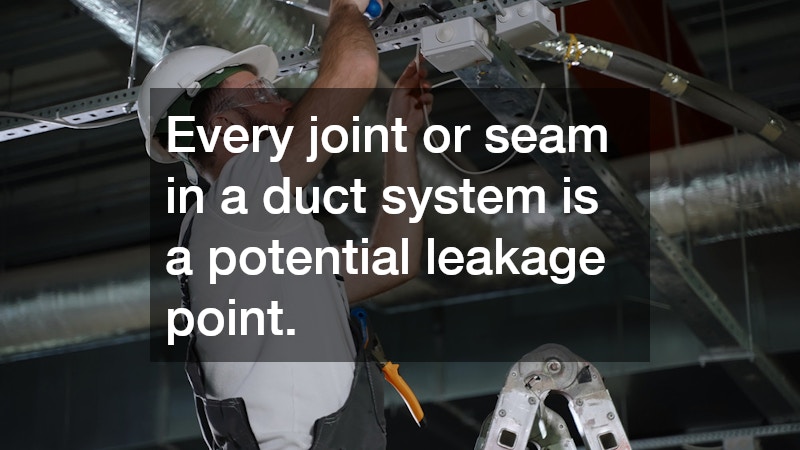
Every joint or seam in a duct system is a potential leakage point. In industrial settings, even small leaks can mean significant energy loss, reduced system capacity, or contamination of clean air streams. Quality fabrication includes properly designed and executed seams, flanges, and gaskets that minimize leakage and maintain system integrity.
Structural Strength and Durability
Industrial environments are harsh. Vibration, thermal expansion, corrosive materials, and mechanical stresses can rapidly deteriorate inferior ductwork. Quality fabrication uses appropriate gauges, reinforcement, and precision forming to ensure that ductwork is structurally sound, resisting deformation, cracking, and premature failure.
3. Performance Impacts You Can Measure
Investing in high-quality fabrication isn’t just a theoretical benefit; it has measurable effects:
- Lower operating energy costs
- Improved airflow and system balance
- Extended service life of fans and motors
- Reduced maintenance and downtime
- Better compliance with safety and environmental standards
Facilities that prioritize fabrication quality often see returns through reduced utility bills, fewer corrective repairs, and smoother inspection outcomes. In systems where contaminants or hazardous air streams are handled, quality ductwork also helps protect worker safety and regulatory compliance.
4. What Makes Fabrication “High Quality”?
Here are a few characteristics that separate quality ductwork fabrication from average:
Precision Layout and Cutting
Accurate flat pattern development and cutting, particularly for transitions, offsets, and non-standard shapes, means pieces fit together with minimal gaps and distortion.
Skilled Forming and Welding
Proper forming maintains shape integrity, while professional welding techniques ensure strong, airtight seams without warping components.
Material Selection
Choosing the right metal type and thickness for the application, whether galvanized steel, stainless, or specialized alloys, protects against corrosion and fatigue.
Attention to Finish and Sealing
From gaskets to caulking to mechanical fasteners, quality fabrication considers every contact point to ensure airtightness and longevity.
5. Why Partner With a Dedicated Fabricator Like Fox Equipment
At Fox Equipment, industrial ductwork fabrication isn’t an add-on service; it’s a core capability backed by experience, craftsmanship, and engineering insight. We work with clients to:
- Understand system requirements
- Select appropriate materials
- Execute precision fabrication
- Coordinate delivery and installation
Our goal isn’t just to make ductwork – it’s to build components that help systems operate at peak efficiency, with lower lifecycle costs and greater reliability.
Conclusion
Quality industrial ductwork fabrication is more than good metalwork; it’s a performance driver. From airflow efficiency and leak prevention to system longevity and cost savings, high-quality ductwork helps your entire mechanical system perform better.
If you’re planning an installation or evaluating existing ductwork, partnering with a dedicated fabricator like Fox Equipment ensures you get precision, durability, and performance where it counts.